Table of contents
You've noticed a suspicious review on your business profile that matches no real transaction, and you're worried about the impact of these fake reviews on your reputation and on the credibility of online reviews. To protect your digital image, find out how to effectively report fraudulent reviews on Google: this practical guide explains how to spot a misleading review, gather the necessary evidence and file an effective report with the platforms.
The simplest way to judge is the 14-day free trial: everything is set up in twenty minutes.
Identifying reviews and preparing your report
Before reporting fake reviews, make sure they really are fraudulent. Identifying these false comments precisely makes for a more relevant report and helps strengthen the reliability of the reviews you flag. This rigor serves a broader goal: keeping your Google reviews sincere and credible.
Recognizing a suspicious review
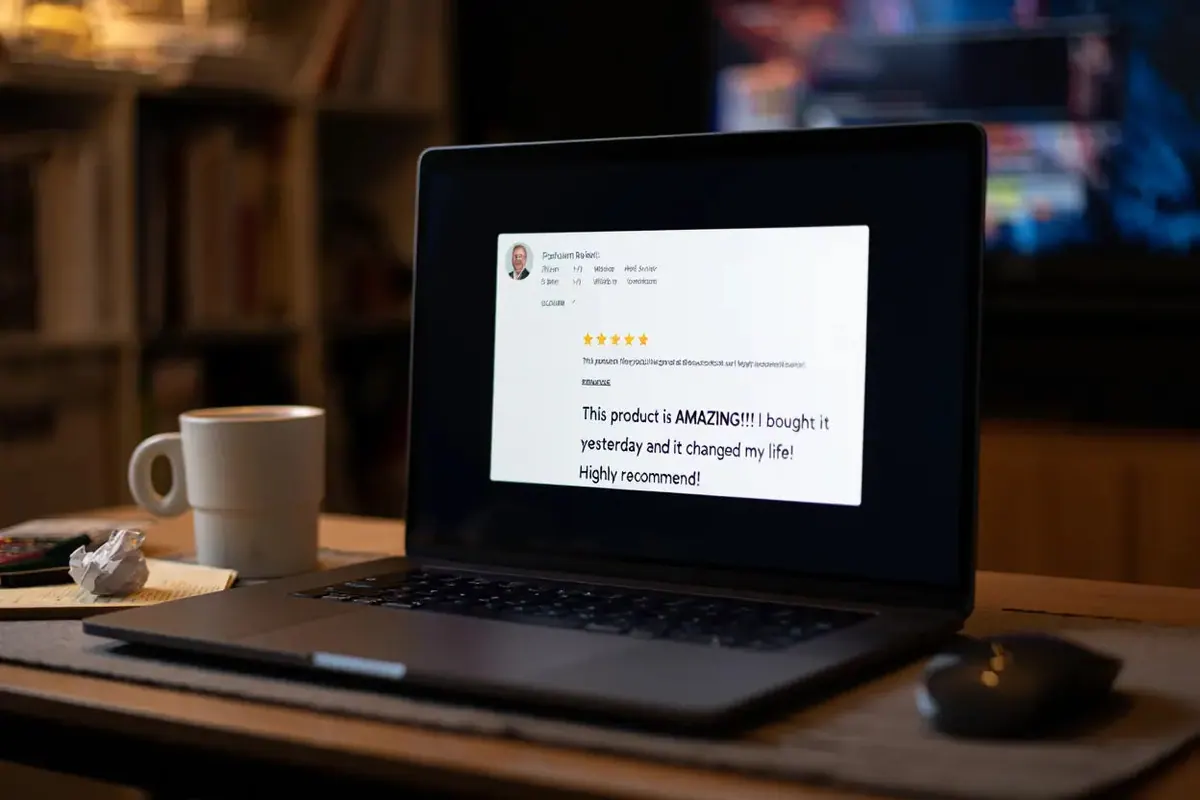
Several clues can help you spot suspicious Google reviews: overly vague wording, glaring inconsistencies or identical promotional messages are all warning signs. Repeated language errors across several flagged reviews often betray automated creation.
The author's profile also gives valuable hints: a recently created account, no profile photo, activity limited to a few similar reviews or reviews posted in bulk on the same day. These traits often suggest fake profiles involved in an organized campaign of fake consumer reviews.
Building a solid evidence file
Always take screenshots of the problem reviews, including the URL, date, time and username, as these details will make reporting to Google or the DGCCRF easier. This rigorous approach shows you're serious and secures your case.
Attach irrefutable business evidence: order numbers, invoices, email exchanges, delivery notes or IP addresses located outside your area of activity. These documents prove that no real transaction took place and considerably strengthen your report. Handle these documents with care, following the rules on customer data protection.
Understanding the legal risks
French law protects consumers against the different types of fake reviews that distort competition. Writing or buying fraudulent reviews is a misleading commercial practice that is severely punished, as the DGCCRF regularly reminds people. For the full picture, see what French law says about reviews.
The Consumer Code requires platforms to clearly explain their procedures for verifying the authenticity of reviews. The Digital Republic Act provides for fines of up to €300,000 and two years' imprisonment for failing to meet transparency obligations on the collection, moderation and publication of consumer reviews.
The authorities come down hard on businesses that tamper with their online reputation by posting fake reviews or using fake profiles. Reporting fake reviews therefore protects your business profile while safeguarding consumer trust. You will find more guidance in our selection on legislation and fake reviews.
How to report a Google review effectively
Once you've spotted a fraudulent review and gathered all the necessary evidence, it's time to make the report. Discover the detailed procedure in our complete guide to maximize your chances of a quick removal. This method effectively protects your online reputation and ensures transparent follow-up if needed.
Steps to report on Google
Start by going to Google Business Profile. In the Google reviews section, find the problem review. Click the three vertical dots and select report review to submit it for moderation. The more precise your case, the better your chances of getting a quick removal.
- Choose the right category: "Inappropriate content", "Harassment", "False information" or "Spam" depending on the nature of the problem.
- Write a clear explanation: Describe the anomalies objectively, without letting your emotions show.
- Attach solid evidence: Invoices, screenshots or links to documents can help prove that these are indeed fake positive Google reviews.
Once submitted, your dashboard will show the status of your report. Google usually confirms receipt within 24 to 72 hours. If the irregularity is obvious, removal can be immediate. During this period, avoid replying publicly so you don't interfere with the investigation.
In the case of a coordinated campaign of fake positive reviews, you can report up to ten comments at a time. This option lets you protect your reputation effectively before the damage becomes too great.
Follow-up, reminders and appeals
Wait 48 to 72 hours to find out the decision on the reported Google review. If the review stays online despite your evidence, file a new report with additional elements such as an invoice in the customer's name. Then use the "Appeal" feature to get a second review.
Note down every step carefully: report dates, ticket numbers, Google's replies. This documentation is valuable for tracking the case and proving your good faith. If you get no response after ten business days, contact Google Business Profile support directly.
A controlled public response
If, despite your efforts, the Google review stays up, reply publicly in a professional manner. Mention that you have reported this content and invite the author to contact you privately to resolve the issue. This approach shows your willingness to talk while protecting your reputation.
Always offer a direct solution (phone number or email). Wait three days after the fake review report before replying: this gives Google time to analyze the case and shows that you respect the procedure.
Managing and handling fake Google reviews
It is crucial to master the reporting procedures on every platform where our reputation is at stake, well beyond Google. Each site has its own moderation rules and specific mechanisms for reporting fraudulent reviews. A multi-platform approach effectively protects your brand image against reported reviews that could harm our credibility.
Penalties and legal obligations
In France, fake Google reviews are severely punished: up to €300,000 in fines and two years in prison. Posting fraudulent reviews or buying fake reviews to influence consumers is considered a misleading commercial practice. Acting quickly to remove misleading reviews limits legal risks and protects your digital reputation. The same logic applies the other way round, since inflating your rating with paid reviews is the same misleading practice.
- Platform obligations: sites that receive online reviews must explain how they verify their authenticity, or face penalties.
- Transparency about moderation: our process for collecting and verifying reviews is clearly explained to guarantee authentic reviews only.
- DGCCRF oversight: this administration actively monitors manipulation of consumer reviews and can investigate suspect businesses.
- Professionals' responsibility: soliciting only positive reviews or offering rewards is prohibited and can lead to an immediate report.
For any legal question about publishing reviews, it's best to consult official recommendations or a specialist. This helps you avoid the costs of a forced removal and keep a reputation built on authentic Google reviews. These recommendations overlap with professionals' obligations regarding reviews.
Reporting on other platforms
On Trustpilot, TripAdvisor or PagesJaunes, the process is simple: just click "Report" on each suspicious review, then choose the matching option. To strengthen our request, we add screenshots and business evidence, which makes it easier to get fake comments removed.
To alert the authorities, Signal Conso (free) lets you report "Misleading or fake reviews" with supporting evidence. The PHAROS platform handles fraud cases, while Signal-Spam deals with spam disguised as online reviews.
Ongoing tracking and prevention
We centralize all reported reviews in a table showing their status: "Pending", "Under review", "Removed" or "Rejected". For each case, we keep the URL, the report date and the person in charge of the case, ensuring complete traceability of reported reviews.
Automatic alerts notify us as soon as a new Google review appears on Google Business Profile, letting us quickly spot possible fake Google reviews. A sudden surge of negative (or positive) reviews often reveals an organized campaign: in that case, a batch report is needed to remove the fraudulent reviews before they affect the authenticity of your reviews.
| Platform | Average processing time | Estimated removal rate | Appeal possible |
| Google Business Profile | 24-72 hours | 65-75% | Yes |
| Trustpilot | 5-7 days | 55-65% | Yes |
| PagesJaunes | 3-5 days | 60-70% | Limited |
| TripAdvisor | 48-96 hours | 50-60% | Yes |
Frequently asked questions
How can you spot a fake review on Google?
Detecting fake reviews on Google means watching for certain telltale signs: comments that are too vague or, on the contrary, unusually precise with an excess of superlatives, recent user accounts with no photo or contribution history, inconsistencies with the actual services. A series of reviews posted on the same date, clumsy language (mistakes, overuse of capitals/emojis) or references to competitors are all clues that help you recognize a fake review and justify reporting it.
What should I do if Google refuses to remove a fake review?
If a fake review stays up despite a first report, adopt a stronger strategy: build a case with tangible evidence (invoices, CRM records) showing that no business relationship ever existed. Then use the "Appeal" feature to request a new assessment with a view to removal, while posting a constructive reply to limit the impact on your reputation among people reading the reviews on Google.
Can I take legal action against a fake negative review?
When a fake Google review causes significant harm and persists after being reported, a legal complaint becomes an option. Put together a solid file (screenshots, correspondence, proof that no contract existed) before contacting the DGCCRF or a lawyer. The goal? To obtain a court order to remove the fake review and, if possible, a conviction of its author to protect your reputation over the long term.